
The term "Serration" for motor shafts, also commonly known as knurling, ribs, or ribs, refers to the regular or irregular raised ribs formed on the surface of a section of a motor shaft through stamping or rolling.

I. The Core Function of Motor Shaft Stamping
1️⃣ Preventing Part Slippage (The Primary Reason)
The motor shaft typically mates with the following parts:
Fan blades
Gears
Couplings
Pulleys
Copper sleeves / Plastic sleeves

2️⃣ Improved Reliability of Interference Fits
Many motor shafts and parts are:
Interference Fit (Pressure Fit)
The Role of Ribs:
The ribs are "compressed and deformed" during press fitting.
Automatically compensates for minor errors in bore diameter.
Less prone to loosening than plain shafts.
In actual production, for the same interference fit, ribbed shafts have 30%–100% higher torsional strength than plain shafts.
3️⃣ Reduced Processing Costs
To achieve the same effect without ribs, typically:
Stricter shaft tolerances
Higher precision hole machining
Even adding keyways or adhesives (such as anaerobic adhesives)
While ribs:
Simple and fast process
Low cost
No additional assembly steps required
4️⃣ Prevent loosening after long-term use
Motors experience the following during operation:
Vibration
Thermal expansion and contraction
Start-stop impact
Strike force:
Absorb minor assembly errors
Suppress fretting
Extend overall machine lifespan
II. Why use ribs instead of keyways?
Comparison: Ribs vs. Keyways
Machining Cost: Low vs. High
Machining Speed: Fast vs. Slow
Suitable for Small Shaft Diameters: ✅ ❌
Dynamic Balance Impact: Small vs. Large
Mass Production: Very Suitable vs. Unsuitable
III. Common Rib Forms
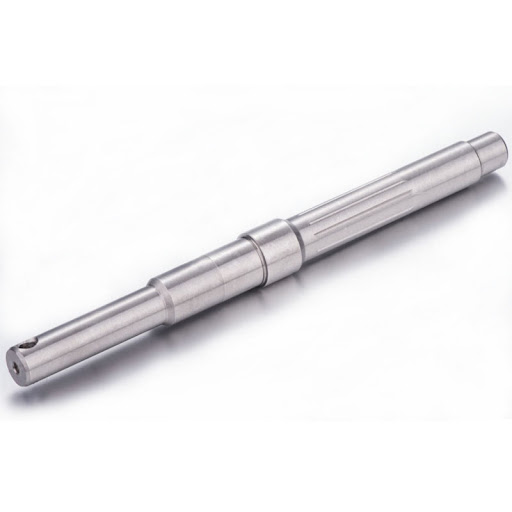
1️⃣ Straight Ribs (Longitudinal)
Best torsional resistance
Commonly used in gears and couplings
2️⃣ Diagonal Ribs / Diamond Ribs
Torsional resistance + axial force resistance
Commonly used in plastic fan blades
3️⃣ Local Ribs
Ribs only in the assembly section
Easy to position and disassemble
IV. When is Serration machining absolutely necessary?
✅ Ribbed machining is strongly recommended in the following situations:
Plastic parts directly pressed onto the shaft
Copper bushings / Powder metallurgy gears
Small shaft diameter, relatively high torque
No glue application allowed, no looseness allowed
❌ Ribbed machining is generally not recommended in the following situations:
High-speed precision shafts (extremely sensitive to concentricity)
Existing keyways or splines
Structures requiring frequent disassembly and assembly
Contact: Sam
Phone: +86 186 8899 7860
E-mail: info@boosum.com
Add: No. 109, Houting Second Industrial Zone, Shajing Street, Bao'an District, Shenzhen